
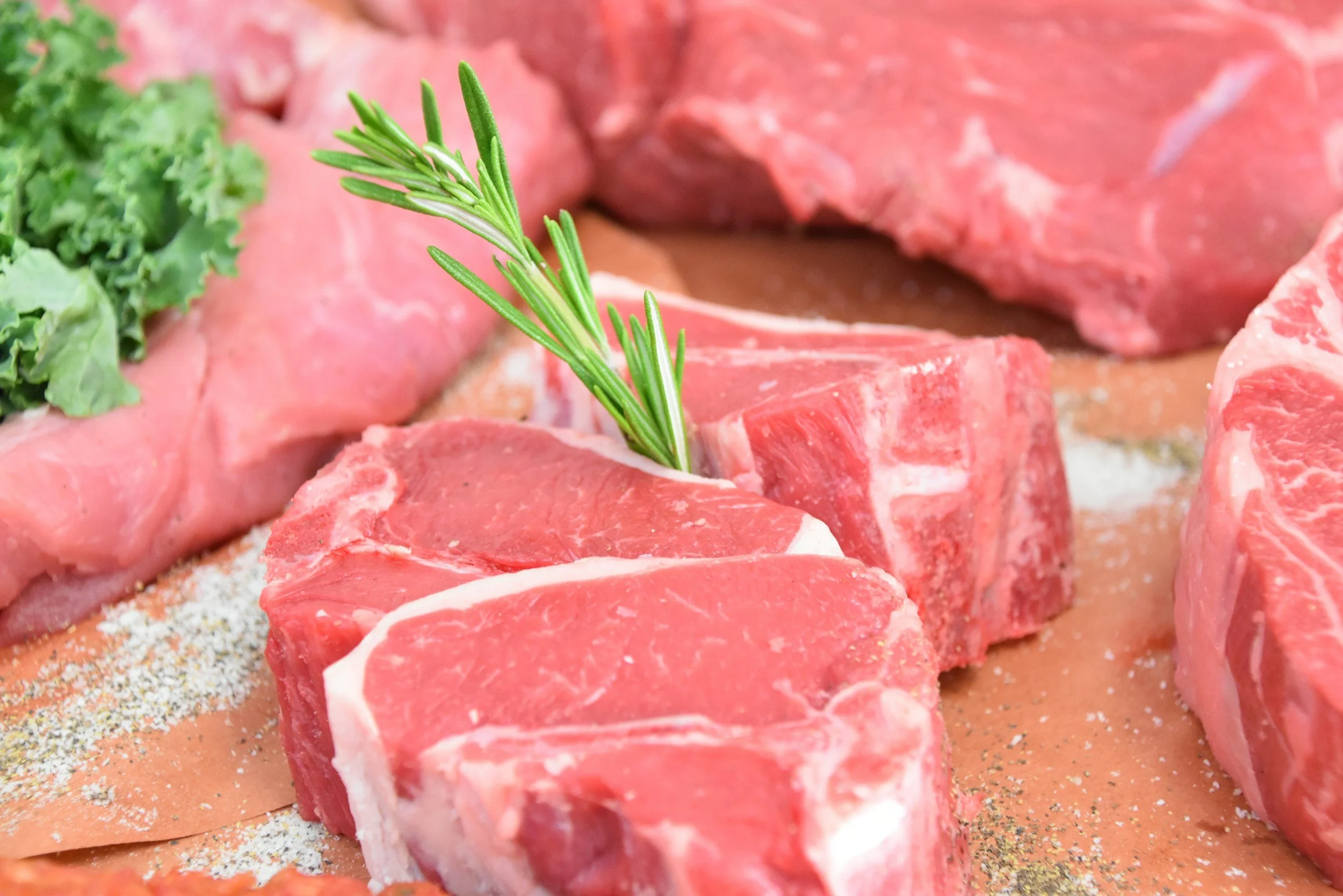
Pork Fillet, lean raw
Introduction
Pork is the meat derived from domestic pigs (an animal), commonly consumed around the world; it must be cooked before eating to ensure safety, as raw or undercooked pork can carry pathogens such as Trichinella and harmful bacteria.
The flesh typically ranges from pale pink to deeper reddish-pink, with white to creamy fat marbling—the pink colour comes from myoglobin, a muscle pigment that binds oxygen; the amount of myoglobin and the animal’s age and diet influence the hue. Pork is notable for its versatility (cuts vary from lean tenderloin to fatty belly) and flavour, which develops further with cooking and curing.
Nutritionally, pork is a good source of protein and provides essential B vitamins (especially B1/thiamine, B3/niacin, B6 and B12), as well as minerals including iron, zinc and phosphorus; fattier cuts also supply saturated and unsaturated fats and are higher in calories, while lean cuts offer lower fat and a higher protein-to-calorie ratio.
Nutrition Snapshot per 100g
Kcal nn kcal
Protein nn g | nn %
Fat nn g | nn %
Carbohydrates nn g | nn %
Percentages reflect this food’s Balance*
Fibre nn g
Total Sugars nn g
Saturated Fat nn g
Salt nn mg
Nutritional values are per 100g and sourced from UK CoFID data.
Carbohydrates value includes Fibre (AOAC method).
Carbohydrates value includes Total Sugars including naturally occurring sugars such as glucose, fructose, lactose or sucrose.
Balance*
The Balance value expresses how protein, carbohydrate and fat contribute to a food’s total energy.
Using CoFID data per 100g, each macronutrient is converted into energy using the standard Atwater convention (protein × 4 kcal, carbohydrate × 4 kcal, fat × 9 kcal). The energy from each macronutrient is then calculated as a percentage of the total macro energy.
This provides a simple way to see whether a food is predominantly carbohydrate-based, protein-based or fat-based.
It does not determine whether a food is “good” or “bad”, but helps visualise its macronutrient profile within a broader eating pattern.
When assessing a full meal or daily intake, portion sizes should be taken into account.
Why this matters
Understanding the structure of individual foods can help you make more confident decisions when adjusting to a health diagnosis or long-term condition.
If you are organising meals, tracking intake or reflecting on patterns, you may find the Aardelia digital journals helpful.