
Blackberries
Introduction
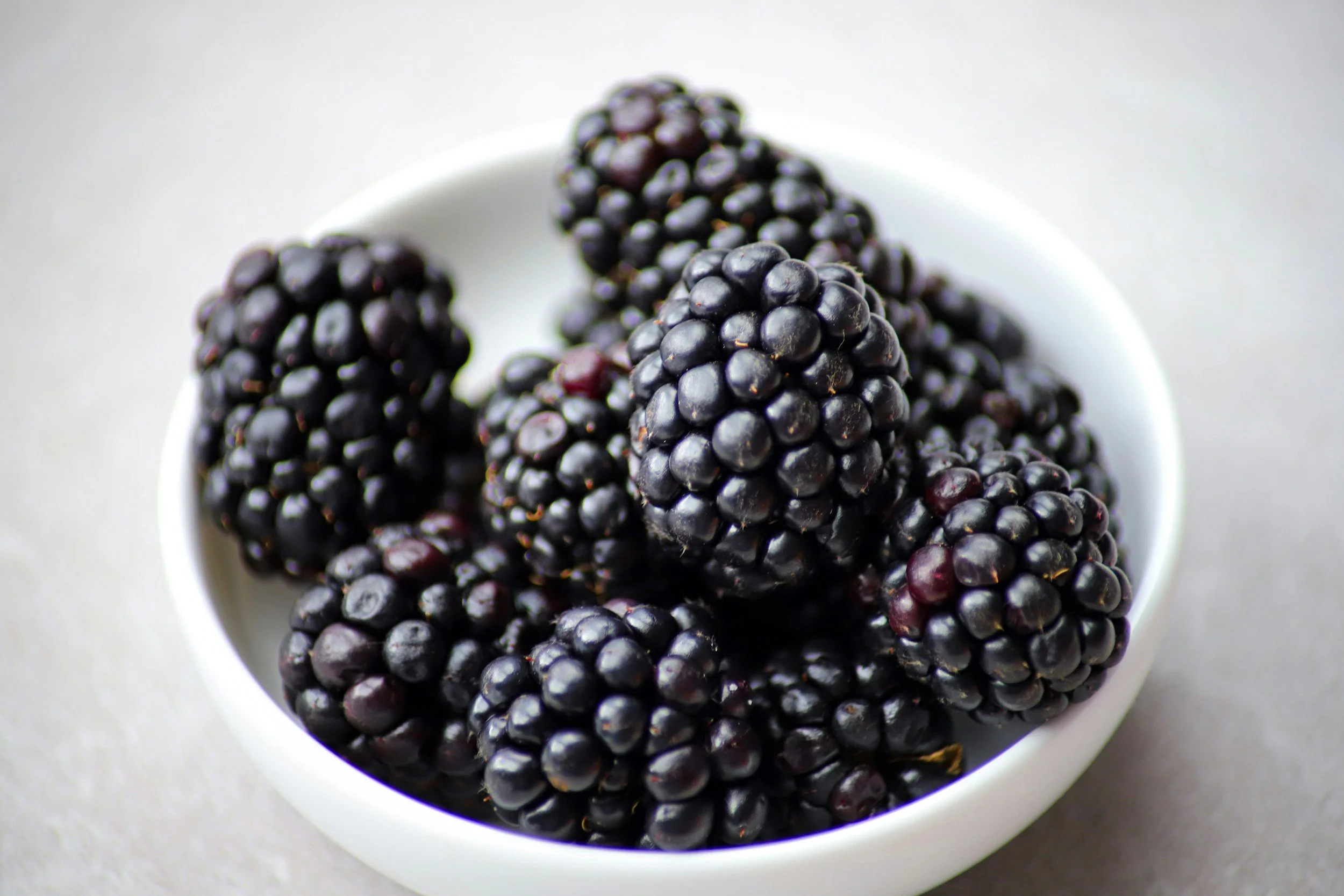
Blackberries are a soft, edible fruit produced by several species of the Rubus genus; they grow on bramble bushes and can be eaten raw or cooked, depending on preference and use.
Fresh blackberries are deep purple to almost black when ripe because they contain high levels of anthocyanin pigments, which also act as antioxidants and give them their characteristic color. They have a juicy, slightly tart-sweet flavour and are commonly eaten straight from the bush, added to salads, yogurt and smoothies, or cooked into jams, pies and sauces.
Nutritionally, blackberries are low in calories and provide carbohydrates (mostly natural sugars and fibre), a modest amount of protein and negligible fat; key micronutrients include vitamin C, vitamin K, folate, and manganese, along with dietary fibre and various antioxidant polyphenols.
Nutrition Snapshot per 100g
Kcal nn kcal
Protein nn g | nn %
Fat nn g | nn %
Carbohydrates nn g | nn %
Percentages reflect this food’s Balance*
Fibre nn g
Total Sugars nn g
Saturated Fat nn g
Salt nn mg
Nutritional values are per 100g and sourced from UK CoFID data.
Carbohydrates value includes Fibre (AOAC method).
Carbohydrates value includes Total Sugars including naturally occurring sugars such as glucose, fructose, lactose or sucrose.
Balance*
The Balance value expresses how protein, carbohydrate and fat contribute to a food’s total energy.
Using CoFID data per 100g, each macronutrient is converted into energy using the standard Atwater convention (protein × 4 kcal, carbohydrate × 4 kcal, fat × 9 kcal). The energy from each macronutrient is then calculated as a percentage of the total macro energy.
This provides a simple way to see whether a food is predominantly carbohydrate-based, protein-based or fat-based.
It does not determine whether a food is “good” or “bad”, but helps visualise its macronutrient profile within a broader eating pattern.
When assessing a full meal or daily intake, portion sizes should be taken into account.
Why this matters
Understanding the structure of individual foods can help you make more confident decisions when adjusting to a health diagnosis or long-term condition.
If you are organising meals, tracking intake or reflecting on patterns, you may find the Aardelia digital journals helpful.