
Tuna, Fresh raw
Introduction
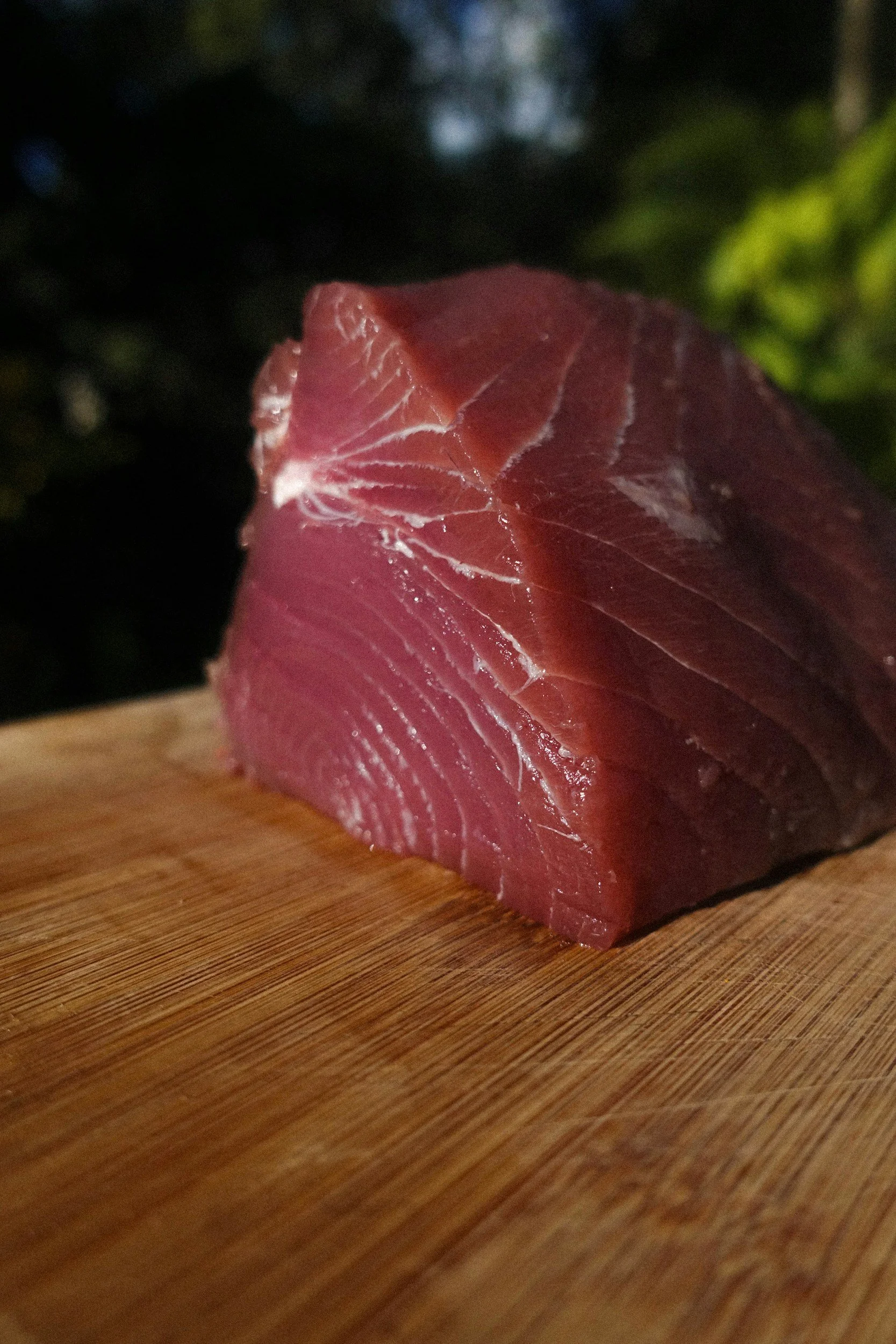
Tuna is a large, migratory saltwater fish (animal) prized for its firm flesh and rich flavour; it can be eaten raw — commonly as sushi, sashimi or poké — provided it is very fresh and has been handled to minimise parasites and bacterial contamination.
Commercial tuna is tinned in water, brine or oil for longer shelf life. Raw tuna has a distinctive deep pink to rich red colour due to high myoglobin content in its muscle (more active swimming species have darker flesh), and the texture ranges from buttery to meaty depending on species and cut.
Nutritionally, tuna is an excellent source of high‑quality protein and provides healthy omega‑3 fatty acids (EPA and DHA), B vitamins (notably B12 and niacin), vitamin D, selenium and iodine; it is low in carbohydrates and, when not packed in oil, relatively low in total fat, though larger species can contain higher levels of mercury so consumption recommendations apply.
Nutrition Snapshot per 100g
Kcal nn kcal
Protein nn g | nn %
Fat nn g | nn %
Carbohydrates nn g | nn %
Percentages reflect this food’s Balance*
Fibre nn g
Total Sugars nn g
Saturated Fat nn g
Salt nn mg
Nutritional values are per 100g and sourced from UK CoFID data.
Carbohydrates value includes Fibre (AOAC method).
Carbohydrates value includes Total Sugars including naturally occurring sugars such as glucose, fructose, lactose or sucrose.
Balance*
The Balance value expresses how protein, carbohydrate and fat contribute to a food’s total energy.
Using CoFID data per 100g, each macronutrient is converted into energy using the standard Atwater convention (protein × 4 kcal, carbohydrate × 4 kcal, fat × 9 kcal). The energy from each macronutrient is then calculated as a percentage of the total macro energy.
This provides a simple way to see whether a food is predominantly carbohydrate-based, protein-based or fat-based.
It does not determine whether a food is “good” or “bad”, but helps visualise its macronutrient profile within a broader eating pattern.
When assessing a full meal or daily intake, portion sizes should be taken into account.
Why this matters
Understanding the structure of individual foods can help you make more confident decisions when adjusting to a health diagnosis or long-term condition.
If you are organising meals, tracking intake or reflecting on patterns, you may find the Aardelia digital journals helpful.